

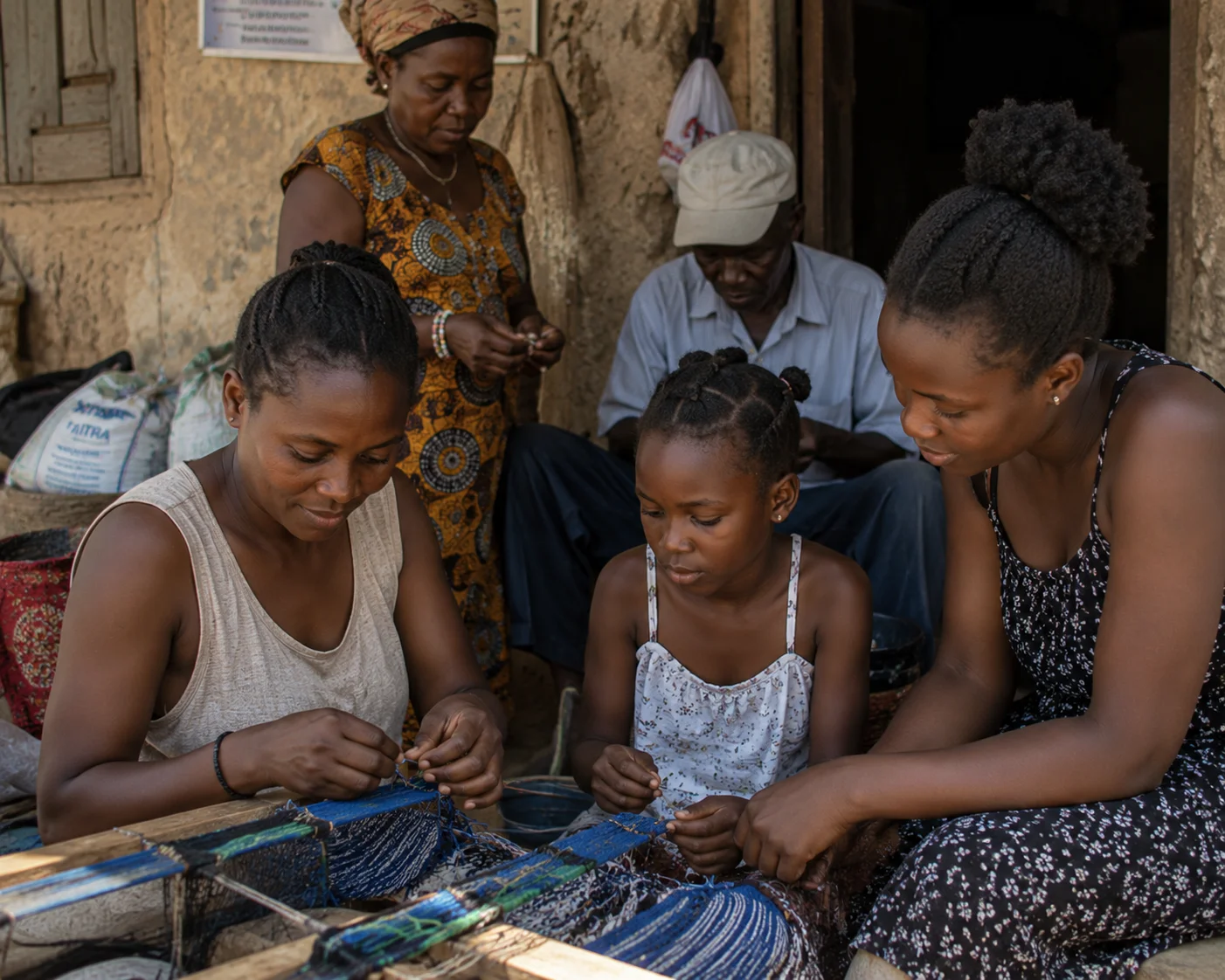
Across villages, towns, and artisan communities around the world, family and community have always been at the heart of traditional craftsmanship. Skills, values, and cultural traditions are often passed from one generation to the next, creating a deep connection between people, heritage, and handmade work. This article explores community and family through the techniques, context and cultural knowledge described here.
For over two decades, Amina and her family have worked together to preserve these traditions — sharing knowledge, supporting one another, and creating opportunities that strengthen their community.
In this way, every handmade creation reflects both individual craftsmanship and the collective spirit of family and community.
The Roots of Tradition — community and family
Amina grew up in a close-knit artisan family where creativity, hard work, and cultural values shaped everyday life.
From an early age, she watched parents, grandparents, and neighbors work side by side, exchanging skills, stories, and techniques that had been passed down through generations.
Through these experiences, she learned that craftsmanship was about more than creating beautiful products — it was about preserving identity, supporting families, and keeping traditions alive.
Over time, a family practice grew into a lifelong commitment to community empowerment.
The Strength of Family Craftsmanship — community and family
In many artisan communities, families pass skills on through hands-on experience and shared knowledge.
Amina’s family works together through every stage of the creative process, including:
- Teaching traditional techniques to younger generations
- Sharing responsibilities across family members
- Preserving cultural patterns and artistic traditions
- Supporting local artisans through collaboration
- Creating sustainable opportunities within the community
In turn, each contribution strengthens the craft and the people behind it.
Working Together
Moreover, community craftsmanship thrives through cooperation and mutual support.
Every project involves collective effort, including:
- Sourcing materials locally
- Sharing tools, resources, and knowledge
- Mentoring young artisans
- Supporting women and family-led enterprises
- Encouraging sustainable economic growth
Through teamwork, families and artisans preserve traditions while adapting to modern opportunities.
Cultural Importance
For this reason, handmade crafts represent more than artistic expression in many communities.
They help preserve:
- Cultural identity
- Family traditions
- Community values
- Local knowledge and heritage
- Generational skills and storytelling
Likewise, each handcrafted piece connects people, families, and traditions.
Challenges & Resilience
Like many traditional artisan communities, Amina’s family faces modern challenges.
These include:
- Competition from mass-produced goods
- Limited access to global markets
- Rising material costs
- Declining interest in traditional crafts among younger generations
Despite these challenges, they remain dedicated to preserving their heritage and creating opportunities for future generations.
Connection to Our Collection
Every handcrafted piece inspired by communities like Amina’s reflects the values of family, collaboration, and cultural preservation.
Ultimately, your support helps sustain:
- Artisan families and local communities
- Traditional craftsmanship
- Cultural heritage and storytelling
- Ethical and sustainable livelihoods
- Generational knowledge and skills
👉 Explore handcrafted creations inspired by community traditions
For Amina, craftsmanship is not simply about creating products — it is about strengthening families, preserving culture, and building a future where traditions continue to thrive.
For broader context on traditional craft knowledge as living heritage, see UNESCO’s overview of traditional craftsmanship.