

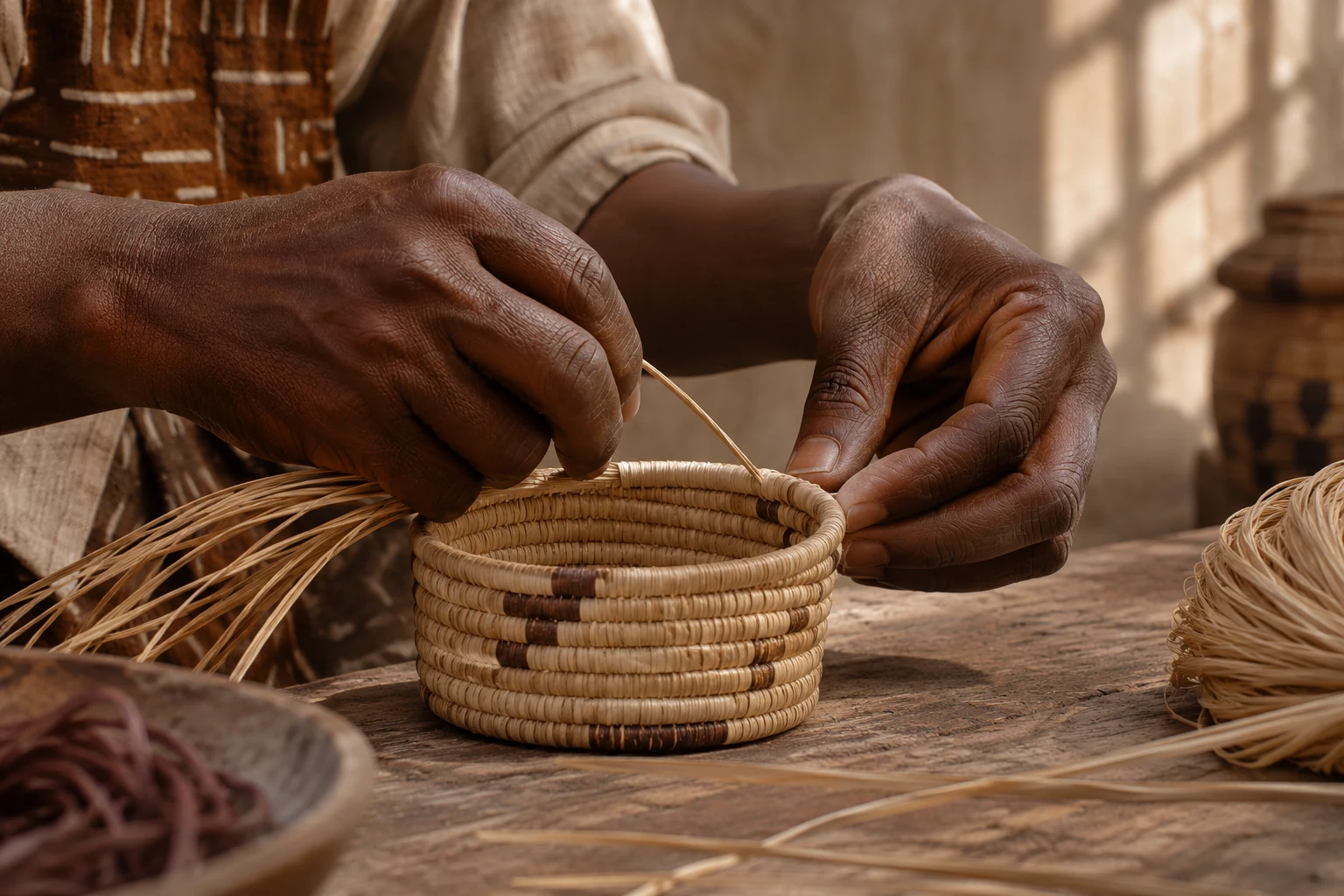
Across cultures and continents, arts and craftsmanship have long served as expressions of creativity, identity, and cultural heritage. This guide to arts and craftsmanship explores the skills, materials, and cultural knowledge behind handmade work. Through skilled hands and generations of knowledge, artisans transform raw materials into meaningful creations that reflect the traditions, stories, and values of their communities.
For more than 20 years, Samuel, a dedicated artisan and craft maker, has devoted his life to preserving traditional artistic techniques while sharing the beauty of handmade craftsmanship with new generations.
In this way, every creation carries skill, heritage, and purpose.
The Beginning of His Craft
Samuel grew up surrounded by artisans whose work filled local markets, homes, and community celebrations. From an early age, he watched skilled makers carve, weave, shape, and decorate objects by hand, learning that craftsmanship was both an art form and a cultural legacy.
Inspired by these traditions, he began practicing the techniques taught by elders and experienced artisans in his community.
Over time, curiosity grew into a lifelong passion for preserving traditional craftsmanship.
Arts and Craftsmanship in Handmade Creation
In practice, arts and craftsmanship require patience, precision, and creativity.
Samuel works with:
- Traditional tools and techniques
- Locally sourced natural materials
- Handcrafted decorative methods
- Cultural symbols and artistic motifs
- Skills passed down through generations
As a result, each piece reflects its community’s heritage and artistic identity.
Moreover, no two handcrafted creations are exactly alike.
Arts and Craftsmanship: The Creative Process
From start to finish, creating handmade art calls for technical skill and artistic vision.
Samuel’s process includes:
- Selecting and preparing materials
- Designing patterns and artistic details
- Shaping and crafting each piece by hand
- Applying decorative finishes and embellishments
- Refining every detail to ensure quality and authenticity
Every stage is completed with care to preserve the integrity of the craft.
Cultural Significance
Throughout history, arts and craftsmanship have played an important role in cultural expression and community life.
For example, artisans create handcrafted works for:
- Home decoration
- Ceremonies and celebrations
- Cultural and religious traditions
- Gifts and family heirlooms
- Community markets and artisan fairs
For Samuel, craftsmanship represents a bridge between tradition, creativity, and cultural identity.
Challenges & Preservation
Despite growing appreciation for handmade products, traditional artisans face significant challenges today.
Samuel speaks about:
- Competition from mass-produced goods
- Declining interest in traditional crafts
- Rising costs of materials and production
- Limited opportunities for artisan education
Yet he continues his work with dedication, helping ensure that traditional skills and artistic knowledge remain alive for future generations.
Connection to Our Collection
Likewise, each handcrafted piece inspired by Samuel’s work reflects artistry, authenticity, and cultural preservation.
In turn, your support helps preserve:
- Traditional artisan techniques
- Cultural heritage and creativity
- Ethical and sustainable craftsmanship
- Artisan livelihoods and communities
- Generational knowledge and skills
👉 Explore handcrafted creations inspired by traditional arts and craftsmanship
Above all, Samuel sees craftsmanship as a way to preserve culture, celebrate creativity, and share the stories behind handmade work.
For a wider view of craft as living heritage, see UNESCO’s overview of traditional craftsmanship.