
Ethical sourcing starts with clear information about who made a product, where it was made, and how makers are credited and paid. This article explains what ethical sourcing can look like when businesses work with African craft makers.
Each region carries its own identity, shaped by history, landscape, tradition, and community. Across the continent, culture is expressed through craft, colour, material, and meaning.
Culture by Region invites you to explore how geography shapes craftsmanship — and how tradition lives differently across the continent.
The Power of Place — ethical sourcing
Where something is made matters just as much as how it is made.
Each region influences:
- The materials artisans use
- The techniques passed through generations
- The patterns and symbols in design
- The rituals and daily life connected to craft
In every object, you can trace the story of a place
West Africa — ethical sourcing
A vibrant centre of textile, weaving, beadwork, and sculpture traditions.
Craft highlights:
- Kente weaving (Ghana)
- Mud cloth textiles (Mali)
- Wood carving and masks
- Beadwork and ceremonial jewellery
West African craft is deeply symbolic — often tied to identity, storytelling, and ceremony.
East Africa
Known for bold beadwork, textile traditions, and pastoral craftsmanship.
Craft traditions include:
- Maasai beadwork and jewelry
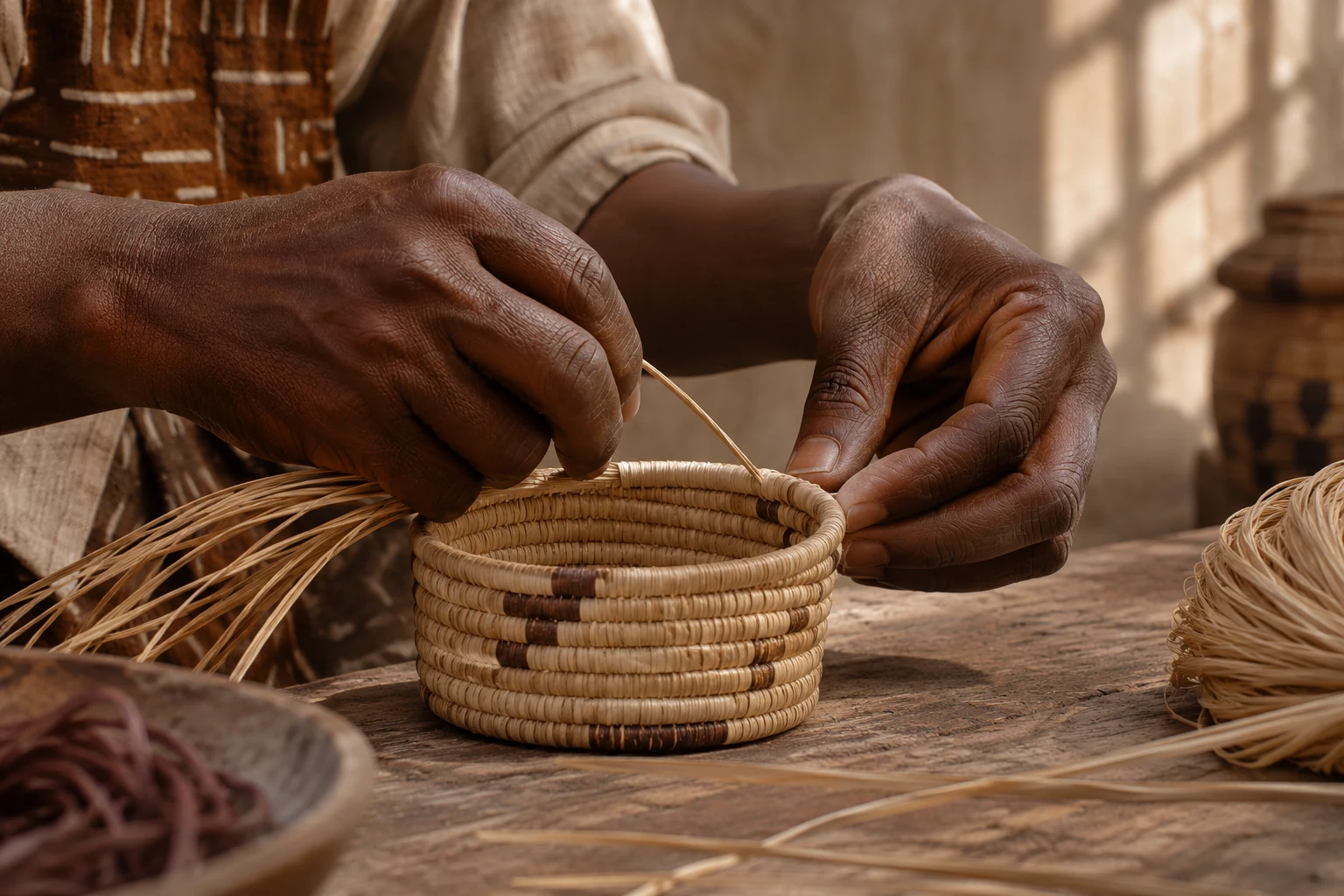
- Handwoven baskets
- Leatherwork
- Textile dyeing techniques
Craft here reflects movement, nature, and cultural expression through color and pattern.
Central Africa
Rich in sculptural traditions and natural material craft.
Craft highlights:
- Wooden sculptures and masks
- Basket weaving
- Bark cloth textiles
- Ritual objects and ceremonial art
Art here often connects deeply to spirituality, ancestry, and community life.
Southern Africa
Defined by bold patterns, contemporary influence, and traditional techniques.
Craft traditions include:
- Zulu beadwork
- Wire art and sculpture
- Textile weaving
- Basketry and functional craft design
Southern African craftsmanship often blends tradition with modern artistic expression.
Craft as Cultural Identity
Across all regions, one truth remains:
Craft is more than decoration — it is identity.
It reflects:
- Belonging
- Heritage
- Ritual
- Daily life
- Community memory
Every handcrafted object carries the fingerprint of its region.
Connecting Culture to Craft
Each region in this collection is directly linked to handcrafted products inspired by its traditions.
When you explore by region, you are not just browsing products —
you are discovering stories, people, and places behind them.
👉 Explore handcrafted pieces by region
To understand African craft, you must first understand its land.
Because every thread, carving, and pattern begins somewhere — shaped by the culture, people, and geography of its origin.
For broader context on traditional craft knowledge as living heritage, see UNESCO’s overview of traditional craftsmanship.